




- projects@morayaaircon.com
- +91 7030877999, +91 9225123921
Product Details of Variable Refrigerant Flow
Moraya Aircon
Variable Refrigerant Flow
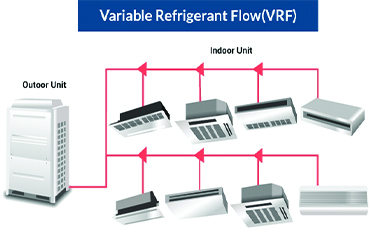
Variable Refrigerant Flow (VRF) systems are advanced air conditioning technologies designed for energy efficiency and flexibility in commercial and large residential buildings. Here’s a brief overview of how they work:
How VRF Systems Work:
- Variable Refrigerant Flow: VRF systems control the amount of refrigerant flowing to each indoor unit, which allows precise temperature control and higher efficiency.
- Outdoor Unit: A single outdoor unit can serve multiple indoor units. In larger systems, there may be multiple outdoor units connected to even more indoor units.
- Indoor Units: Each indoor unit can be controlled independently, allowing for individual temperature settings in different rooms or zones.
- Inverter Compressors: These compressors can run at variable speeds, adjusting the cooling or heating output as needed, which saves energy.
- Heat Recovery: Some VRF systems can provide simultaneous heating and cooling to different areas, recovering heat from cooling processes to use for heating other spaces.
Benefits of VRF Systems:
- Energy Efficiency: By varying the refrigerant flow, VRF systems use only the amount of energy needed to maintain the desired temperature.
- Design Flexibility: The system can be designed to fit a variety of layouts and building sizes.
- Comfort and Control: Individual control of indoor units allows for personalized comfort settings.
- Reduced Space Requirements: VRF systems require less space than traditional HVAC systems due to the absence of extensive ductwork.