




- projects@morayaaircon.com
- +91 7030877999, +91 9225123921
Product Details of Ventilation
Moraya Aircon
Ventilation
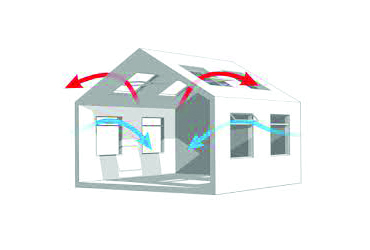
Ventilation is the process of exchanging or replacing air in any space to provide fresh air and improve indoor air quality. It involves the removal of stale air and its replacement with fresh outdoor air. This process is essential for removing moisture, odors, smoke, heat, dust, airborne bacteria, and other pollutants from an indoor environment1. Proper ventilation plays a crucial role in maintaining a healthy and comfortable environment for occupants.
Here are some key points about ventilation:
- Components of Ventilation:
- Intake and Exhaust Vents: These allow fresh air to enter and stale air to exit.
- Fans: Used to circulate air within a space.
- Ducts: Channels that distribute air throughout a building.
- Filters: Remove particles and contaminants from the air.
- Dampers: Control airflow.
- Heat Exchangers: Recover heat from exhaust air.
- Sensors and Controls: Monitor and regulate ventilation systems.
- Grilles and Diffusers: Disperse air evenly.
- Make-up Air Units: Supply fresh air to compensate for exhaust.
- Humidifiers/Dehumidifiers: Adjust humidity levels.
- Types of Ventilation:
- Natural Ventilation: Relies on natural air movement (e.g., windows, doors, and vents).
- Mechanical Ventilation: Uses fans and mechanical systems to circulate air.
- Hybrid Ventilation: Combines natural and mechanical methods.
- Spot Ventilation: Targets specific areas (e.g., bathrooms, kitchens).
- Whole House Ventilation: Ventilates the entire building.
- Positive Pressure Ventilation: Introduces air to create positive pressure.
- Negative Pressure Ventilation: Removes air to create negative pressure.
- Health and Comfort Impacts:
- Poor ventilation can lead to health issues and discomfort.
- Proper ventilation ensures better indoor air quality and well-being.
- Energy Efficiency and Climate Considerations:
- Balancing energy efficiency with effective ventilation is essential.
- Climate affects ventilation system choices.
- Carbon Dioxide and Gas Movement:
- Ventilation helps remove carbon dioxide and other gases.
- Understanding airflow science is crucial.
- Importance of Proper Ventilation:
- It contributes to a healthy building envelope.
- Architects consider ventilation in design.